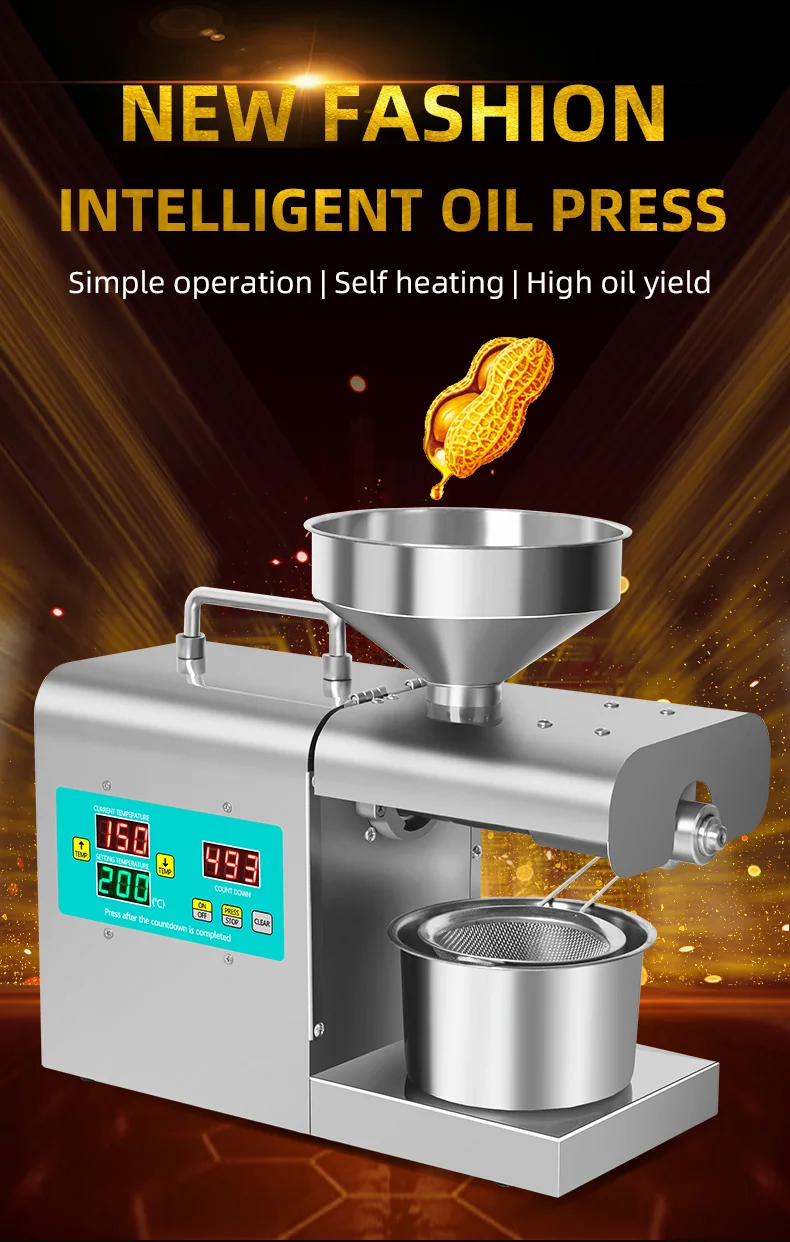
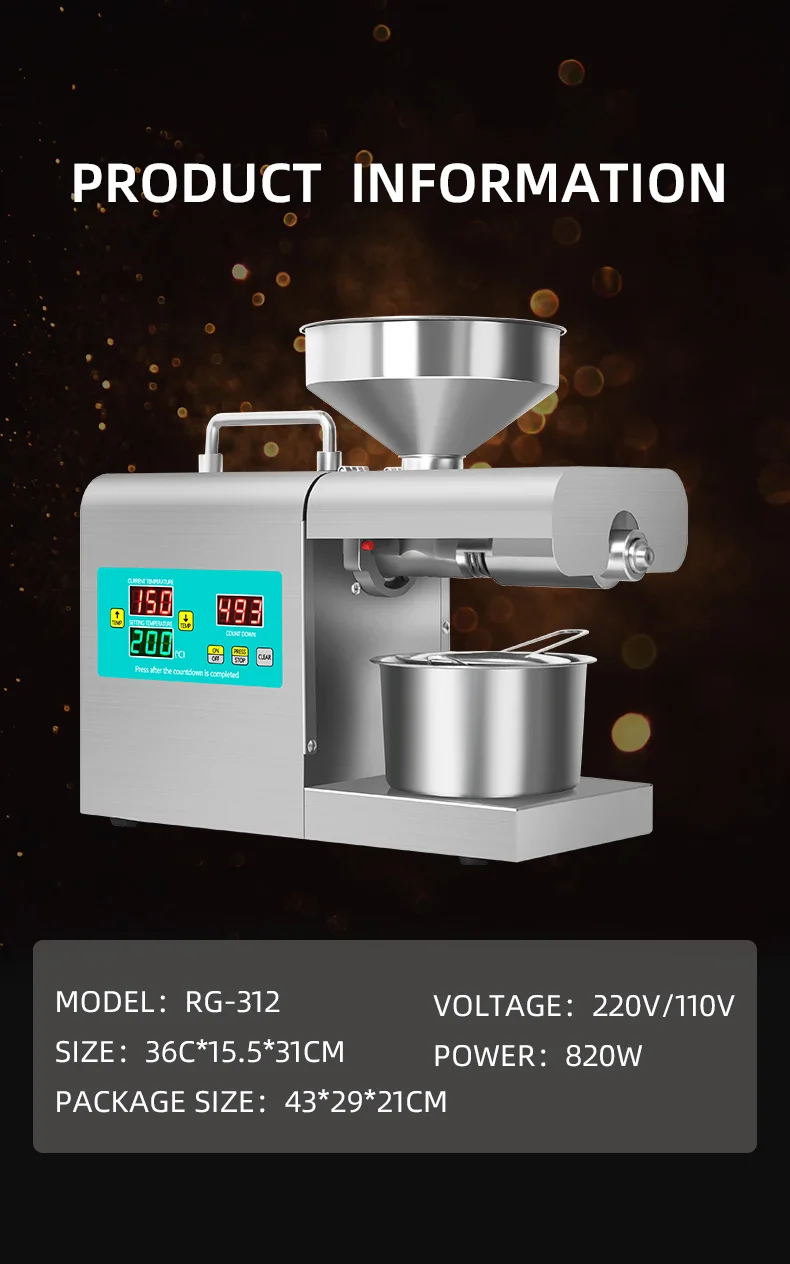
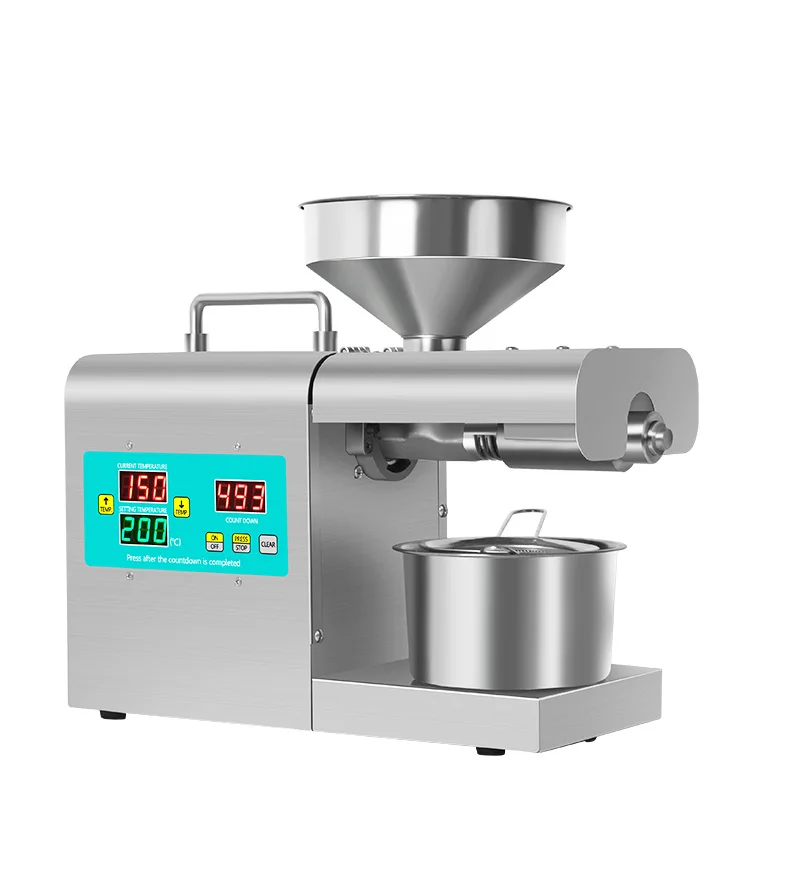
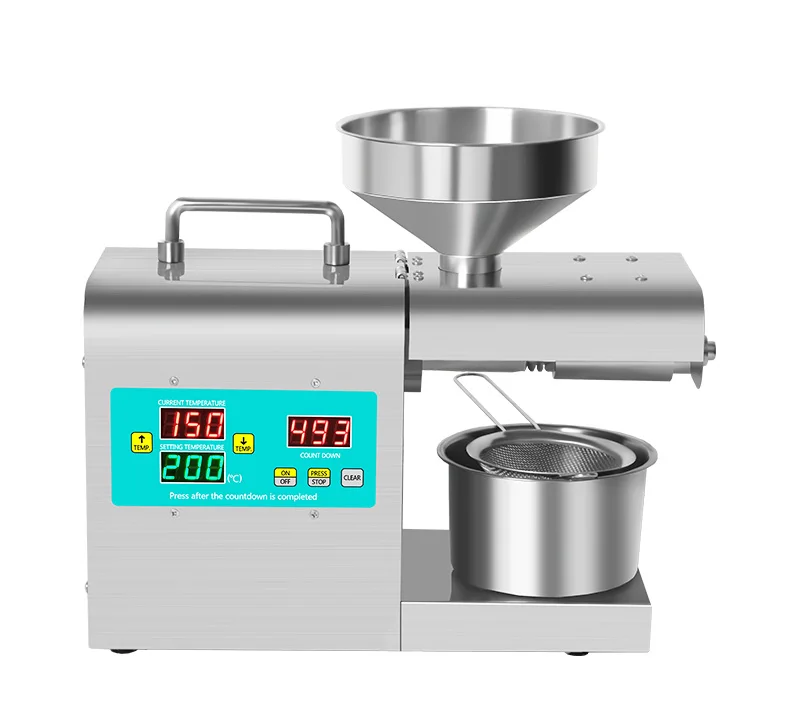
The following are the questions that the customer service for purchasing an oil press may have. I can answer some key points for you in advance.
Regarding cold pressing and hot pressing modes:
Cold pressing refers to the process where materials are directly pressed without being heated.
2. Hot pressing refers to the process where materials are heated to 60-80 degrees and then put into pressing.
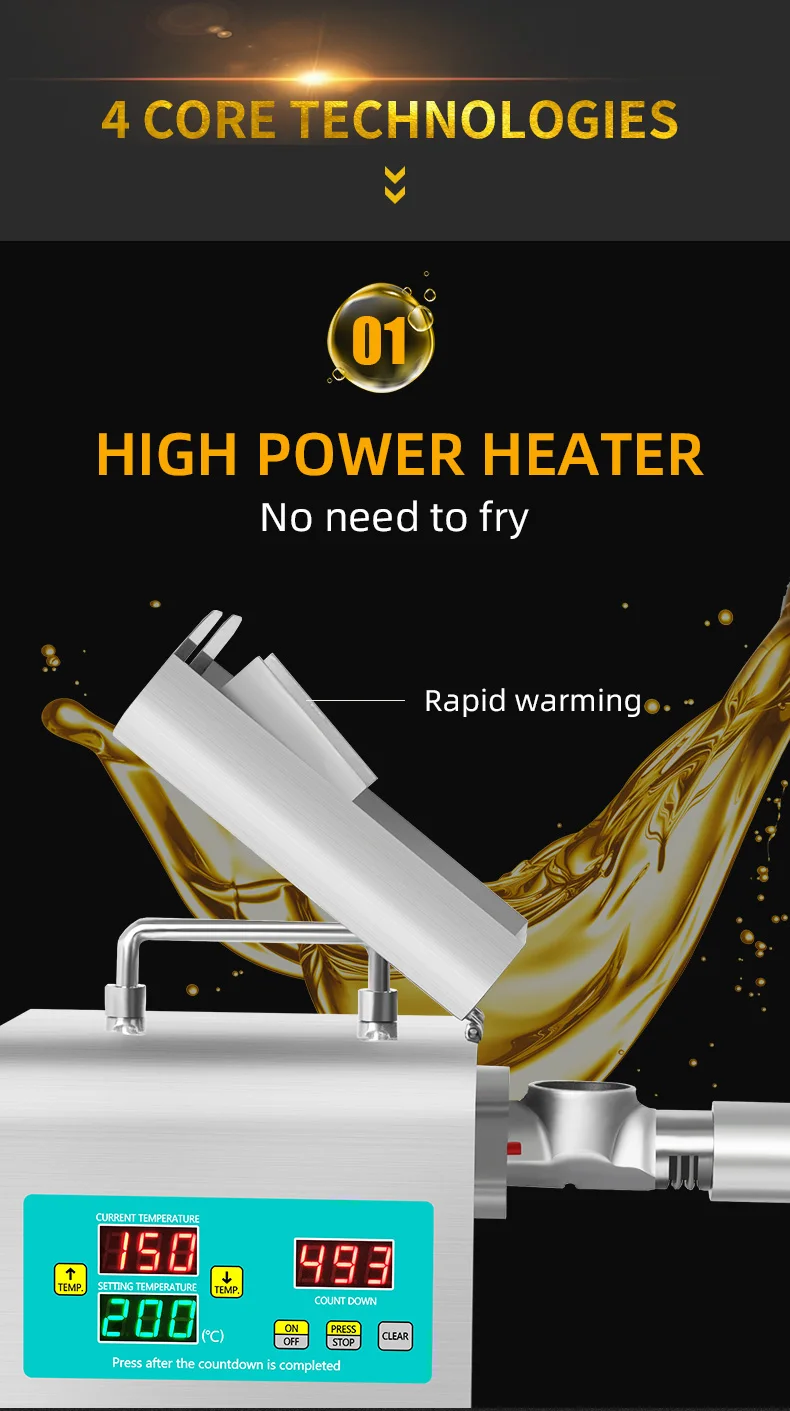
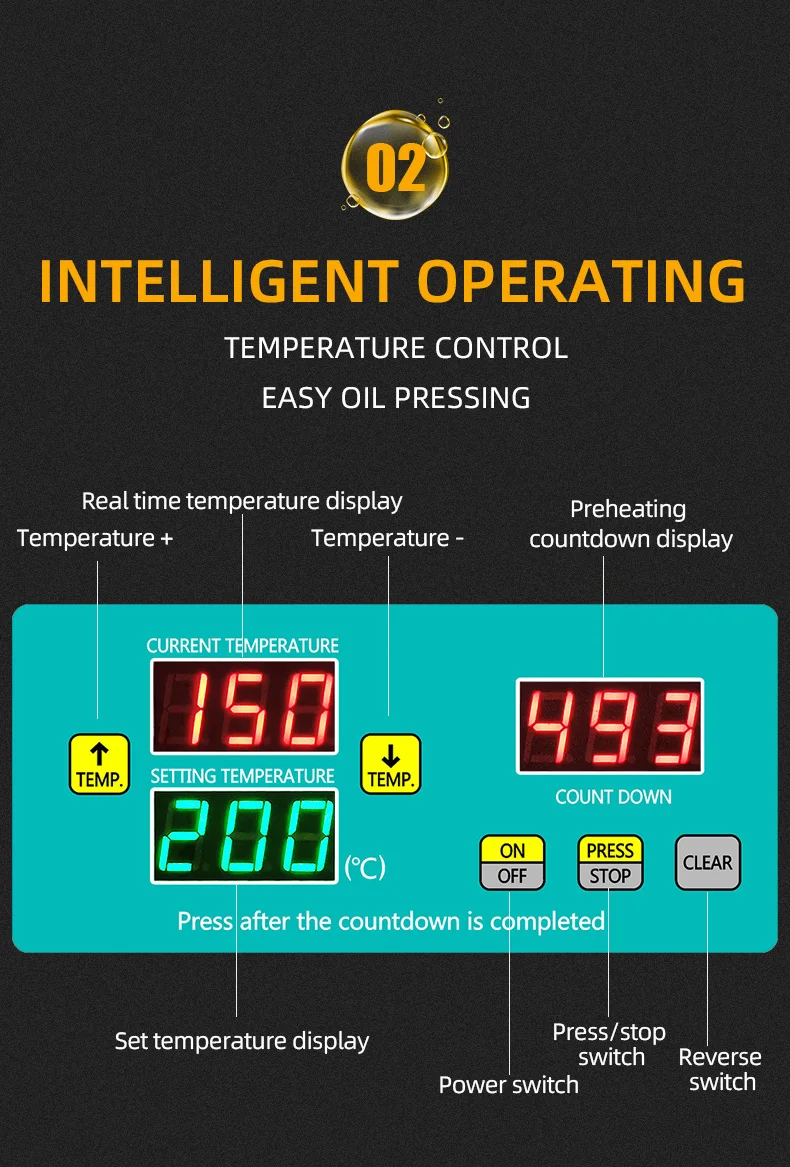
3. Whether cold pressing or hot pressing, our oil press must be preheated. Only when the pressing chamber is preheated to around 200 degrees Celsius can the oil be separated from the material. If the machine is not heated, the material will only be squeezed into a paste and the grease cannot be separated.
4. Under the cold-pressing mode of the material, the normal temperature of the oil coming out is around 40° C, and the nutritional components will not be lost.
Under the hot pressing mode of the material, the oil yield is higher, the oil will be more fragrant, and the oil output temperature is 60-80 degrees, during which some nutrients will be lost.
Therefore, the hot-pressing mode is generally suitable for pressing low-value edible oils such as rapeseed and peanuts, with the pursuit of oil yield and the aroma of stir-fried dishes. Cold pressing mode is generally suitable for pressing high-nutrition complementary food oils such as walnut oil, flaxseed oil, almond oil and olive oil, ensuring that nutrients are not lost.
Regarding the oil yield
The actual oil yield will be affected by various factors such as the fullness of the material, local differences, and humidity, and will actually be lower than the data in the table. The oil yield is mainly determined by the material itself, just as we humans have different levels of fatness and thinness, and the fat content is also different. Our machines only differ in the pressing speed. No matter which model of machine it is, the oil yield of the pressing is the same.
There are two ways to obtain pressed olive oil:
The first one is to press olive kernels, which our machine can easily do.
The second method is to press fresh olives. Whole oil olives are put into a large hydraulic press for pressing, and then the obtained olive juice is separated again. The process is rather complicated. This is not something that our household screw oil press can do.
Therefore, our machine is only suitable for pressing olive kernels, not fresh olives.
Regarding raw materials for oil extraction:
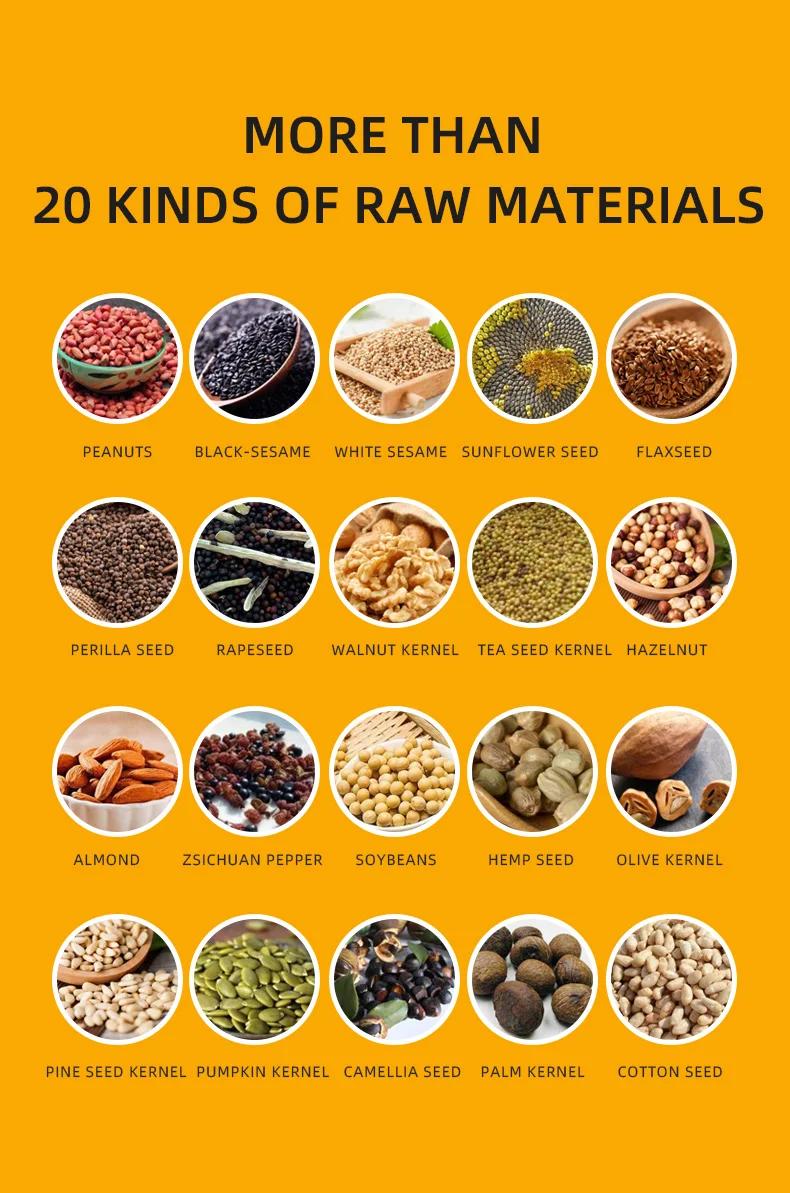
There are many raw materials that we have neither seen nor tested. So the basic principle is:
① The seeds of plants can generally be pressed
② The pulp generally cannot be squeezed
③ Flowers, leaves, roots and stems should not be pressed
④ No part of an animal can be pressed
⑤ For those with shells, remove the hard shells
⑥ If the particles are too large, please process them into soybean-sized particles
Common raw materials
For example, coconut flesh: It needs to be dried in the sun and cut into small pieces, which can be used to extract oil.
For example, avocado: 1. The avocado kernels can be dried and cut into small pieces to extract oil. 2. The flesh of the avocado can be dried in the sun or baked in a microwave oven, or it can be pressed for oil.
Regarding the situation where no oil can be extracted during pressing:
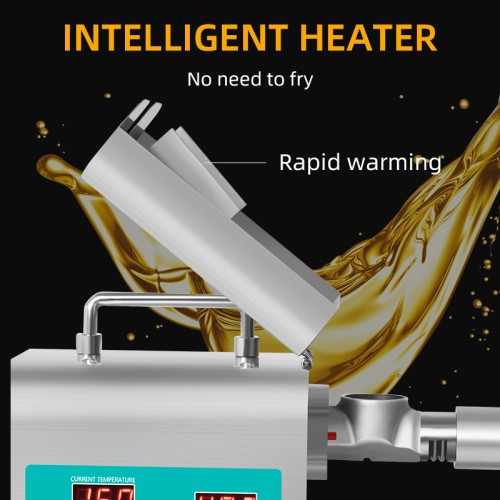
If your oil press has pressing problems, it is very likely that 90% of them are caused by temperature issues. If the pressing chamber is not preheated and the pressing is carried out directly, the raw materials will not be exposed to high temperatures in the pressing chamber and thus cannot achieve oil and residue separation. Therefore, what comes out directly is paste. All oil presses must be preheated for 8 to 10 minutes, and the S series models (large commercial) need to be preheated for 15 minutes. If it is a 110V voltage area, the preheating time should be doubled. Moreover, the pressing chamber and pressing rod should be installed, and the front cover should be lowered to ensure that the heater is in close contact with the pressing chamber.
Regarding the heating temperature of the raw materials:
Reference for the raw material temperatures we have tested
Raw peanuts, 220-230 degrees
2) Roasted peanuts, 180 to 200 degrees
3) Raw and roasted white sesame seeds, 220 degrees
4) Raw black sesame seeds, 200 degrees
5) Roasted black sesame seeds, 230 degrees
6) Walnut kernels, 180 degrees
7) Flaxseeds, either raw or cooked, 190-200 degrees
8) Rapeseed 180-200 degrees
9) Sunflower kernels, Perilla seeds, 150 degrees
10) Tea seed kernels, 100 degrees
11) Almonds, 180 degrees
12) Pumpkin seeds, 200 degrees